From Archive to Wardrobe: How Vintage Eyewear Becomes Wearable Now
The best vintage eyewear does not ask to be preserved behind glass.
It asks to be worn.
That is part of its appeal. A great frame may have been designed decades ago, but if the proportions are right and the character is intact, it rarely feels trapped in its original era. Instead, it brings something many modern accessories struggle to offer: depth. Not just visual interest, but a sense of authorship. A shape that feels resolved. A material with substance. A design language that carries its own point of view.
Vintage eyewear has lasting power because it is not only about nostalgia. At its best, it feels entirely present. It sharpens modern clothing, adds conviction to simple dressing, and introduces a layer of individuality that newer pieces often lack.
The question is not whether vintage eyewear can be worn now. It is how to wear it in a way that feels current, effortless and entirely your own.
Why great design survives its original era
Fashion moves quickly. Good design does not.
That is why certain frames outlast the decade that first produced them. The strongest vintage eyewear is built on qualities that remain persuasive regardless of trend: proportion, balance, material, silhouette and detail. It does not rely on novelty alone. It holds together because the design itself is sound.
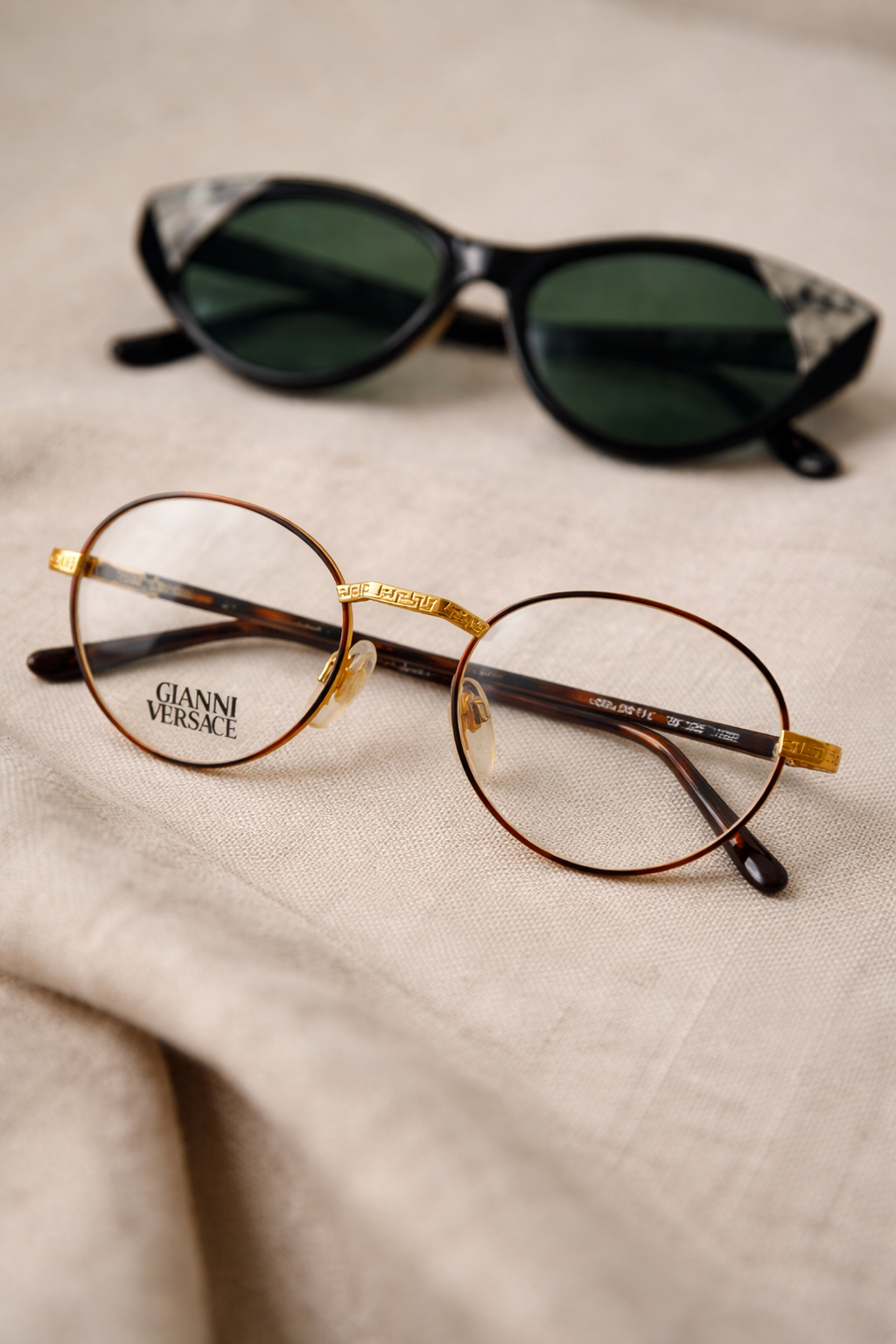
A well-made frame from the 1960s, 1970s or 1980s often feels just as relevant now because its appeal was never limited to one moment. It may carry the visual cues of its era, but those cues are anchored by something more enduring. The curve of a lens. The weight of an acetate rim. The elegance of a bridge. The confidence of an oversized shape that still looks intentional decades later.
This is true of many objects that age well. They stop feeling old and start feeling distinct.
Vintage eyewear belongs in that category. It survives because it still has something to say.
What makes certain vintage frames still feel current
Not every old frame feels modern. Some remain firmly of their time. Others seem to step very easily into the present.
Usually, the difference lies in restraint and clarity. A frame can be unmistakably vintage without feeling overly decorative or fixed in a single cultural reference. Shapes with strong proportions, clean lines and thoughtful detailing tend to translate most easily. They feel specific, but not theatrical. Memorable, but not overworked.
Colour plays a part too. Warm tortoiseshell, black, smoke, deep amber, olive and muted metallic tones often integrate naturally into a contemporary wardrobe. So do silhouettes that still echo what people respond to now: softly oversized shapes, elegant rounds, slim rectangles, classic aviators, architectural squares.
A frame does not need to look modern in the literal sense. It only needs to feel relevant when worn with modern intention.
That is the difference. Relevance comes less from date and more from styling, confidence and context.
How to style older shapes without looking costume-like
This is often the fear with vintage dressing in any form. The concern is not that the piece is too beautiful, but that it might feel too referential. Too complete. Too faithful to the era it came from.
The easiest way around that is not to over-explain the frame with the rest of the outfit.
If the eyewear carries history, let the clothing stay grounded. A clean white shirt, dark knitwear, tailored wool, washed denim, simple outerwear, good leather shoes. Pieces with their own integrity, but without too much retro signalling. The frame then becomes the point of tension in the look, which is often what makes it feel alive.
This is where restraint matters. A 1970s frame worn with a full 1970s-inspired outfit can quickly become costume. The same frame worn with a plain navy coat and modern trousers feels completely different. More precise. More current. More like a personal decision than a themed one.
Vintage eyewear tends to work best when it is allowed to be the historical note in an otherwise present-tense wardrobe.
Pairing bold eyewear with clean, modern clothing
One of the most effective ways to wear vintage frames now is to let them sit against simplicity.
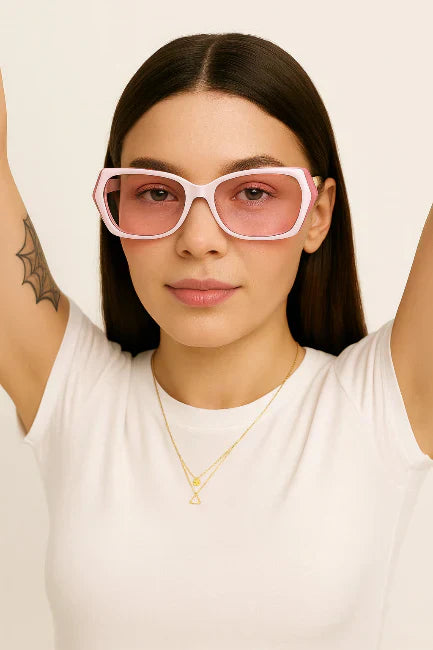
Bold eyewear has a way of organising a look. It brings shape to softer clothes and conviction to minimal ones. A strong frame can transform the feel of a plain T-shirt, a black blazer, a fine knit or a crisp cotton shirt without needing anything else to compete for attention.
This is especially true of oversized or sculptural shapes. When the frame is expressive, cleaner clothing allows it to breathe. The overall effect is usually sharper, not louder. You are not trying to create drama across every part of the outfit. You are creating one focal point and letting the rest support it.
That is often what makes vintage eyewear so practical. It can do the visual work of several accessories at once. It adds depth, silhouette and personality in a single gesture.
A simple wardrobe becomes more distinctive when viewed through the right frame.
Letting one vintage element do the work
The most convincing way to wear vintage is often to wear less of it.
This is what makes eyewear such an ideal entry point. Unlike a full vintage outfit, a single frame can shift the tone of a look without overwhelming it. It can introduce age, texture and design history while leaving everything else open. You do not need multiple references. You do not need to build a character around it. You only need one element with enough presence to carry meaning.
That is why vintage glasses pair so well with contemporary dressing. They create contrast without creating confusion.
A clean wool coat, straight-leg denim, a simple shirt, understated jewellery, polished shoes. None of these pieces need to be vintage themselves. In many cases, they are better when they are not. The frame becomes the distinctive note that makes the rest feel less generic.
When worn this way, vintage does not read as nostalgic. It reads as selective.
Why contrast often feels more contemporary than full retro styling
Contrast is what gives vintage eyewear its modern energy.
When everything in a look comes from the same visual language, the result can feel resolved but predictable. When an older frame is placed inside a cleaner, more contemporary wardrobe, something more interesting happens. The look gains dimension. The references do not collapse into one another. They stay slightly apart, which is often where style begins.
That tension is useful. A glamorous frame becomes more wearable with pared-back clothing. A severe rectangular shape softens against textured knitwear. A delicate metal frame can sharpen casual fabrics. The frame and the wardrobe do not need to match exactly in order to belong together.
In fact, exact matching is often what makes a look feel overly styled.
Modern dressing is usually more persuasive when it leaves room for friction. A little elegance against utility. A little nostalgia against minimalism. A little polish against ease. Vintage eyewear works now not because it fully returns us to the past, but because it interrupts the present in the right way.
The best vintage pieces belong in the present
There is a difference between collecting something and wearing it well.
The best vintage eyewear may carry the spirit of another era, but it becomes most compelling when it is folded into life now. Not as homage. Not as costume. Not as an exercise in retro dressing. Simply as part of a modern wardrobe that has made space for character.
That is what makes a frame wearable in the present. It still brings something useful with it. Shape. confidence. Distinction. A sense that design can age without losing force.
Vintage eyewear does not need to be made contemporary by stripping away its history. Its history is part of the reason it works.
But it should still feel alive when worn today.
That is the real transition from archive to wardrobe. Not preservation, but relevance.
And the best frames never lose it.